
اخبار
From Modern Reductionism to Ancient Holism in the Controversy between Traditional and Modern Medicine - پژوهشکده تاریخ علم utihs
From Modern Reductionism to Ancient Holism in the Controversy between Traditional and Modern Medicine
26 10 2026 21:12
کد خبر : 281191064
تعداد بازدید : 12
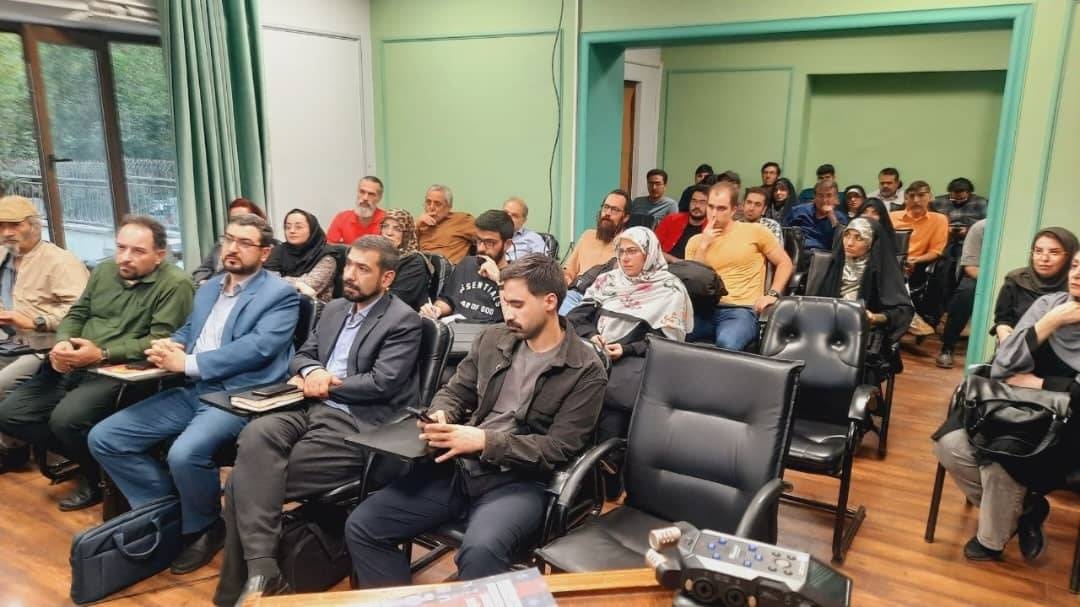
According to an IBNA report, at the scientific session of the Research Institute for History of Science at the University of Tehran titled “Analysis of the Controversy between Modern Medicine and Traditional Medicine: A Historical Look,” Amir-Hasan Mousavi, a researcher in the history of science, referring to his doctoral thesis, examined the historical and philosophical roots of the challenge between traditional medicine and modern medicine.
A New Look at the Controversy between Traditional and Modern Medicine from the Perspective of Philosophy of Science
According to an IBNA report, at the scientific session of the Research Institute for History of Science at the University of Tehran titled “Analysis of the Controversy between Modern Medicine and Traditional Medicine: A Historical Look,” Amir-Hasan Mousavi, a researcher in the history of science, referring to his doctoral thesis, examined the historical and philosophical roots of the challenge between traditional medicine and modern medicine.
Mousavi said at this session that the controversy between complementary medicines and conventional medicine cannot simply be formulated within the framework of “science” and “pseudoscience”; because defenders of traditional medicine try to reject its being pseudoscience, and critics insist on its being pseudoscience. According to him, this framing in Iran is incorrect and ineffective.
This researcher in the history of science, emphasizing the necessity of bringing philosophy of science into this discussion, added: concepts such as “paradigm,” “instrumentalism,” and “pragmatism” are used in the public sphere without precise understanding, and before this research, no comprehensive academic study of this controversy had been conducted.
Mousavi also rejected some misunderstandings and said that traditional medicine should not be considered merely a product of religious government or equivalent to “Islamic medicine”; this challenge has a cross-border nature, and in Western countries too there is a significant statistic of tendency toward complementary treatments. He referred to examples: nearly half of the population of France have experience of encountering homeopathy or similar complementary medicine methods, and in Scandinavian countries about 30 percent of people use indigenous medicines.
According to him, the historical root of this controversy goes back to the entry of modern science into Iran, especially after the establishment of Dar al-Funun. Traditional medicine has a specific framework, treatises, and texts, and every individual claim cannot be presented in its name.
Mousavi said about the main core of the dispute: “the heart of this controversy” is the definition of effectiveness. Modern medicine considers the main criterion to be evidence-based medicine and controlled clinical trials. The academic stream of traditional medicine accepts this principle, but believes that many traditional methods have not yet been tested due to a lack of resources and neglect. In contrast, modern medicine asks: if an intervention lacks biological plausibility, why should heavy research funding be spent on it?
This researcher called the dichotomies “chemical/natural” and “Western/Eastern” false and said that many chemical drugs have natural roots and that medical knowledge is the product of the interaction of civilizations. But he considered the dichotomies “disease/health” and “reductionism/holism” valid; modern medicine is more focused on the treatment of disease, while traditional medicine emphasizes the preservation of health, prevention, and regulation of lifestyle. Also, modern medicine from the eighteenth and nineteenth centuries reduced disease to damage in the organ, tissue, cell, or molecule, while indigenous medicines saw the body as an integrated system in relation to the environment.
Mousavi in the end emphasized that the encounter between tradition and modernity in the field of treatment requires fundamental philosophical dialogues and avoidance of superficial clamor.
Tags
Share


Short Link
https://utihs.ut.ac.ir/en/article/281191064